
Climate-Induced Conflicts: Water Wars in the Global South and Indigenous Rights.
One in four people now face high water stress, as reported by the World Resources Institute. This situation sets the stage for escalating Climate-Induced Conflicts in the Global South. As global warming worsens, droughts, floods, heatwaves, and wildfires are transforming conflict zones. They also increase security risks due to the scarcity of resources.
Research by Tobias Ide and colleagues reveals that climate change acts as a threat multiplier, not the sole cause of water wars. Governance gaps, inequality, and past grievances exacerbate hydroclimatic shocks into disputes. While internal conflicts over resources are more prevalent, the risks are spreading rapidly. They disproportionately affect Indigenous rights.
The United Nations Permanent Forum on Indigenous Issues highlights that communities least responsible for emissions suffer the most harm and displacement. From Arctic hunters facing unsafe ice to the Amazon’s drought-fire cycles and the Himalayas’ meltwater fluctuations, global warming impacts are severe. It strains livelihoods and reshapes security risks. Indigenous knowledge, such as Afar biophysical readings and Borana forecasting, offers practical solutions to reduce resource scarcity and stabilize conflict zones.
This article identifies hotspots in Africa, South Asia, the Middle East, and parts of South America. It emphasizes Indigenous rights as essential for resolving conflicts. It explores how climate change intersects with governance stress to fuel water wars. It also showcases adaptation strategies that can mitigate risks while safeguarding people and ecosystems.
Key Takeaways
- Water stress now affects one in four people, sharpening Climate-Induced Conflicts across the Global South.
- Climate change effects act as threat multipliers, turning shocks into security risks where governance is weak.
- Internal water wars outnumber transboundary disputes in many conflict zones.
- Indigenous rights and knowledge are central to preventing environmental refugees and reducing resource scarcity.
- Global warming impacts—droughts, floods, heatwaves, wildfires—raise the odds of localized violence.
- Evidence-based, inclusive governance can curb water wars and stabilize high-risk regions.
Executive Summary: Water Wars, Indigenous Rights, and Security Risks in the Global South
Climate change is exacerbating water scarcity, increasing Global South security risks. Studies in Africa and Asia reveal most water disputes occur within countries. Indigenous rights, conflict resolution, and adaptation strategies are key to preventing water wars and protecting people and livelihoods.
Research shows droughts, heat, and floods worsen existing pressures. Outcomes depend on governance quality, social equity, and land use. Weak institutions can lead to cascading effects, while inclusive systems reduce risks and foster cooperation.
Indigenous peoples offer proven local stewardship and early warning systems. Secure land tenure and respect for Free, Prior, and Informed Consent enable fair water sharing and resilient infrastructure. These efforts support adaptation strategies and prevent water wars.
Key takeaway: Climate change acts as a threat multiplier. Addressing Global South security risks requires rights-based policies and practical conflict resolution that respects culture, ecology, and science.
| Dimension | Observed Pattern | Implication for Security | Relevant Levers |
|---|---|---|---|
| Conflict Type | Internal disputes outnumber transboundary cases | Local flashpoints strain policing and services | Decentralized conflict resolution and community mediation |
| Geographic Focus | Eastern Africa, the Sahel, Middle East, South Asia | Clustered hotspots raise cross-border spillover risks | Shared data, drought compacts, and river-basin coordination |
| Drivers | Hydroclimatic extremes intensify scarcity | Higher likelihood of water wars where institutions are weak | Early warning, equitable allocation, and demand management |
| Social Factors | Inequality and displacement heighten stress | Rising Global South security risks in urban peripheries | Safety nets, jobs programs, and anti-discrimination enforcement |
| Indigenous Rights | Land tenure and consent shape project outcomes | Reduced grievances and stronger stewardship | Legal recognition and co-management agreements |
| Adaptation Strategies | Blending ILK with climate data improves fit | Lower conflict exposure and faster recovery | Participatory planning and nature-based solutions |
Defining the Climate–Water–Conflict Nexus in Conflict Zones
The climate–water–conflict nexus explores how weather changes and water scarcity impact politics in conflict areas. It shows how disruptions to rivers, aquifers, and systems can increase security risks in areas with weak governance.
Threat multiplier versus direct driver of conflict
Climate change often acts as a threat multiplier, adding stress to already fragile systems. In unstable regions, this stress can escalate minor disputes into major crises.
Direct causes, like service failures or price hikes, can also spark conflict. The distinction is critical for planning, as indirect threats require governance improvements alongside infrastructure upgrades.
Hydroclimatic stressors: droughts, heatwaves, floods, wildfires
Key stressors like droughts, heatwaves, floods, and wildfires affect water availability and quality. They lead to economic losses, reduced livestock, and migration. Such impacts heighten security risks in areas with limited job opportunities and safety nets.
These stressors can rapidly intensify in conflict zones. A sudden flood can follow years of drought, damaging wells and roads. The nexus highlights how these compound shocks strain response systems.
From water stress to governance breakdowns and disputes
Water scarcity can lead to service gaps, fueling disputes over rights and allocation. Without clear rules or enforcement, conflicts escalate. Past cooperation is beneficial, but mistrust is hard to overcome.
Escalation pathways connect hydroclimatic stressors to grievances and conflicts. Early mediation, transparent data, and fair cost sharing can mitigate these risks before they escalate.
| Element | Role in the climate–water–conflict nexus | Typical Signals in Conflict Zones | Implications for Security Risks |
|---|---|---|---|
| Threat multiplier | Amplifies existing political and economic strains | Rising prices, service delays, protest rhetoric | Higher odds of unrest and opportunistic violence |
| Hydroclimatic stressors | Trigger shocks to availability and quality | Drought declarations, heat alerts, flood damage | Displacement, livelihood loss, resource hoarding |
| Governance capacity | Buffers or transmits supply shocks | Backlogs in permits, opaque allocation, corruption probes | Disputes over rights, weakened trust in institutions |
| Social vulnerability | Shapes who bears water stress | Food price spikes, clinic shortages, school dropouts | Recruitment into militias, localized clashes |
| Cooperation history | Sets norms for sharing and crisis response | Existing compacts, joint monitoring, data gaps | Lower escalation when agreements are credible |
Global Warming Impacts on Water Availability and Resource Scarcity
In the Global South and polar regions, climate change is dramatically altering freshwater availability. The IPCC highlights rising extremes, leading to tighter water budgets and increased resource scarcity. These changes affect agriculture, urban areas, river trade, and public health.
Changing precipitation, glacier melt, and drought intensification
Intense rains followed by prolonged dry spells are now common. This pattern disrupts water recharge, erodes soil, and weakens storage capacity. Simultaneously, glacier melt peaks in many mountain ranges, while drought intensification expands in drylands, exacerbating water scarcity for millions.
Aquifers and reservoirs struggle to refill, leading to higher costs and supply gaps for utilities. Farmers adjust planting dates and crop types but face yield declines. These changes strain food security and local markets.
Short-term surpluses, long-term deficits: Himalayan and Andean cryosphere lessons
In the Himalaya and Andes, melting ice and snow initially boost river flow, followed by declines. Early gains hide future deficits as mountain storage diminishes. Downstream, hydropower and irrigation face challenges as baseflow decreases and sediment loads increase.
Cities like Kathmandu and La Paz rely on seasonal meltwater to manage dry periods. As timing shifts, treatment plants and canals must adapt to flashier flows and longer dry seasons, exacerbating resource scarcity during peak demand.
Compounded risks for food security, health, and livelihoods
Water scarcity, heat waves, and wildfire smoke harm labor, learning, and diets. Crop and pasture losses reduce incomes and threaten food security. Warmer waters and damaged pipes also increase disease risks. In fishing and tourism areas, these impacts cut jobs and tax bases simultaneously.
Households respond by drilling deeper wells, migrating, or reducing meals. These actions incur new costs and reveal inequities, where safety nets are scarce. Over time, repeated shocks from drought intensification and glacier melt can erode credit, savings, and trust in local services.
Climate-Induced Conflicts
Water stress is reshaping risk across regions, and climate-induced conflicts now feature in daily headlines. Most events unfold within borders as local grievances meet erratic rain, crop losses, and weak services. Cross-border flashpoints do occur, yet cooperation often tempers the worst outcomes in shared basins.
Internal versus transboundary disputes and their regional patterns
Data-driven reviews indicate internal conflicts account for the majority of water-related unrest. These skirmishes surface in Eastern Africa, the Sahel, the Middle East, and South Asia, where rapid urban growth meets tightening water budgets. By contrast, transboundary disputes cluster in river basins like the Nile, Indus, and Tigris–Euphrates, yet states often pursue talks, joint monitoring, or benefit sharing.
Under-reporting remains an issue in the Americas and parts of Asia, masking local hotspots. Better records, shared early warning, and fair allocation can reduce the triggers that turn stress into strife.
Case pathways: Syria’s drought-migration-unrest linkage
Researchers trace a chain in Syria drought migration: a severe, prolonged dry spell cut yields, depleted aquifers, and stressed pastoral lands. Families left the countryside and crowded into towns seeking work, straining housing, water networks, and food markets. The pressure amplified grievances, turning routine disputes into wider unrest when governance failed to adapt.
This pathway shows how climate-induced conflicts often emerge indirectly. Drought is the spark; poor management and social vulnerability provide the fuel.
Farmer–herder clashes in Africa under declining rainfall and land-use pressures
Across the Sahel and East Africa, farmer–herder clashes rise as declining rainfall shortens growing seasons and shifts pasture routes. Expanding farms and fencing compress corridors, pushing livestock into fields and provoking reprisals. Weak compensation systems, limited policing, and political favoritism can escalate small incidents into prolonged cycles.
Community compacts, mobile water points, and transparent grazing calendars lower risks. When paired with early mediation, they help prevent internal conflicts from spilling into broader transboundary disputes.
- Regional signal: Eastern Africa, the Sahel, the Middle East, and South Asia show dense clusters of climate-induced conflicts.
- Dominant form: Internal conflicts outnumber cross-border cases, even where rivers are shared.
- Key pathways: Syria drought migration and farmer–herder clashes reveal how climate stress interacts with governance and land use.
Indigenous Peoples on the Frontlines of Climate Change Effects
Indigenous peoples, despite their minimal contribution to global emissions, are on the frontlines of climate change. Their deep connection to land, water, and seasonal cycles makes them more vulnerable. This is exacerbated in conflict zones where governance is weak and services are scarce. The pattern is clear: risk increases where rights and resources are constrained.
Political and Economic Marginalization and Loss of Land/Resources
Generations of marginalization, discriminatory laws, and dispossession have pushed many communities onto fragile lands. These lands have low productivity, limiting adaptation and increasing disaster losses. Poverty traps deepen further. Barriers to finance, clean energy, and climate services often exclude Indigenous peoples from project design and benefits.
When droughts, floods, or fires hit, subsistence economies absorb the shock first. In conflict zones, weakened institutions and unsafe access to markets or grazing amplify harm. Resource grabs and evictions compound climate change effects, cutting off water points and mobility routes needed for survival.
Arctic, Amazon, Himalaya, and Kalahari Examples of Climate Exposure
In the Arctic, unpredictable ice and shorter cold seasons threaten hunting, fishing, and reindeer herding. The Saami in Finland, Norway, and Sweden face rain-on-snow events that seal lichen and force costly fodder use, with herd losses reported after mild winters.
Across the Amazon, droughts and fires interact with deforestation, sending carbon into the air and pushing forests toward savanna states. These shifts unravel food systems and transport routes for river communities.
In the Himalaya, glacier melt brings short-term flow gains followed by long-term deficits. Downstream villages dependent on spring snowmelt confront erratic water supplies and crop failures.
In the Kalahari, wind, dune migration, and vegetation loss undermine grazing. Communities cluster near government-drilled boreholes, increasing pressure on limited water and reducing traditional mobility.
Environmental Refugees and Double Discrimination Risks
Sudden shocks and slow-onset losses drive migration, creating environmental refugees who may face double discrimination as migrants and Indigenous peoples. Displacement can raise the risk of trafficking or smuggling, with documentation issues and border closures exacerbating the problem.
Legal hurdles and weak recognition of land tenure reduce access to aid and insurance. Without dedicated pathways to finance, early warning, and secure rights, climate change effects convert temporary moves into protracted displacement in conflict zones.
- Drivers: drought, floods, fire, permafrost thaw, and rain-on-snow events
- Constraints: land loss, restricted mobility, limited climate services
- Risks: livelihood collapse, rights erosion, and exposure to violence
Water Wars in the Global South: Hotspots and Patterns
Recent research maps water stress across the Global South, revealing clusters. Climate shocks, weak services, and contested rights fuel water wars hotspots. The focus is on resource scarcity, local power, and access to basic infrastructure.
Scale matters. Most studies examine village, district, or basin disputes. They highlight wells, canals, pumps, and dams as key flashpoints. Internal conflicts often emerge first, before any cross-border tensions.
Eastern Africa, the Sahel, Middle East, and South Asia focus
In Eastern Africa, rain variability tied to the Indian Ocean Dipole stresses rivers like the Tana and Shabelle. The Sahel faces shrinking grazing lanes and watering points due to shifting isohyets. The Middle East combines rapid urban growth with scarce aquifers and extreme heat. South Asia experiences monsoon swings and dense irrigation networks, exposing farmers and fishers to supply shocks.
- Hydroclimate shifts disrupt planting calendars and pastoral routes.
- Competition rises around boreholes, canals, and storage sites.
- Local rules and enforcement shape whether disputes escalate.
Internal conflicts dominate over transboundary disputes
Conflict chronologies show more village, city, and provincial clashes than interstate crises. Internal conflicts reflect contested allocation, water fees, and damage to pumps or pipes. Urban peripheries, informal settlements, and peri-urban farms often face the brunt.
- Disputes center on access, timing, and quality at the utility and scheme level.
- Resource scarcity interacts with youth unemployment and price spikes.
- Security outcomes hinge on municipal capacity and rapid repair of assets.
Why under-studied regions matter for prevention
Large parts of the Americas and Southeast Asia receive less detailed coverage despite clear exposure. This gap risks blind spots in early action. Drivers vary by hydroclimate and institutions, making universal fixes risky.
Expanding fieldwork, blending satellite data with household surveys, and tracking small-scale incidents can sharpen prevention. Better baselines make it easier to test which measures—water pricing, leak reduction, drought plans—lower risks before they spread.
- Targeted monitoring clarifies where resource scarcity meets governance strain.
- Shared methods improve comparability without masking local context.
- Aligned funding streams support rapid pilots and learning loops in the Global South.
Indigenous Rights as Security and Conflict-Resolution Imperatives
When water becomes scarce and power lines spread, decisions that disregard Indigenous rights can widen divisions. A rights-based approach views culture, territory, and voice as essential to climate justice. It also establishes boundaries for land tenure and equitable resource use under pressure.
Human rights frames for climate justice and land tenure
Human rights norms guide agencies in assessing harm, benefit, and consent. They support secure land tenure and acknowledge customary systems that manage rivers, forests, and grazing routes. The United Nations Permanent Forum on Indigenous Issues advocates for policies that prioritize people over metrics, ensuring reforms respect dignity.
Implementing these safeguards in drought responses or flood recoveries empowers communities. Clear rights diminish disputes over wells, canals, and recharge zones, making conflict resolution quicker and more equitable.
Free, Prior, and Informed Consent in water and energy projects
Free, Prior, and Informed Consent safeguards communities before dams, pipelines, or wind corridors are constructed. FPIC ensures that terms, timelines, and risks are disclosed and negotiated, preventing hasty approvals that fuel resentment. Without FPIC, mitigation efforts can fail, as seen in biofuel monocultures that strain food systems and habitats.
Developers and governments that incorporate FPIC enhance project legitimacy. Early agreements on benefit sharing, access roads, and fish passages can prevent delays and reduce security risks associated with contested sites.
Inclusive governance to reduce security risks
Inclusive governance leverages Indigenous leadership and local knowledge to establish fair water allocations and emergency rules. Co-management bodies, including elected tribal councils and basin authorities, give decisions weight and clarity. This shared approach narrows gaps that often lead to conflict.
Clear dispute pathways—mediation panels, grievance hotlines, and ombud offices—make conflict resolution routine, not reactive. Integrated plans that link rights, climate justice, and land tenure stabilize institutions under stress.
Traditional and Local Knowledge in Adaptation Strategies
In climate-stressed areas, communities rely on Indigenous and Local Knowledge for adaptation. This knowledge tracks weather, water cycles, and ecosystem changes. It guides daily decisions on mobility, grazing, and planting.
Using biophysical observations and indigenous forecasting
Afar pastoralists use wind, soil moisture, and animal health to plan herd movements. These observations match instrumental records and radio forecasts. Borana elders combine animal behavior, stellar positions, and divination for seasonal planning.
Fulani herders rotate forage types and divide labor to manage stress during dry spells. Endorois farmers grow drought-tolerant crops and adjust planting times. Simple field cues, like leaf flush and river color, signal early warnings.
From the Kimberley’s Mirriwong cue flowering to Sarawak’s moon-phase reading, indigenous forecasting tools are used. They combine local signals with modern advisories.
Ecosystem stewardship and carbon sequestration co-benefits
Stewardship practices based on Indigenous and Local Knowledge maintain rangelands, forests, and wetlands. Rotational grazing, controlled fire, and soil mulching restore ground cover. This improves infiltration and supports carbon sequestration.
Agroecology reduces fuel and fertilizer inputs while protecting pollinators and riparian buffers. Where communities manage watersheds, small-scale check dams and seed banks stabilize slopes. Native tree regeneration revives springs.
These choices build ecological buffers that store carbon and reduce erosion. They strengthen food security as climate shocks increase.
Integrating ILK with scientific risk assessments
Combining Indigenous and Local Knowledge with satellite data and climate models sharpens risk assessments. Co-produced maps highlight grazing corridors, sacred sites, and seasonal refuges. This improves early warnings and relief targeting.
Support from national ministries, universities, and NGOs is essential. It should focus on documentation, intergenerational transfer, and joint monitoring. When local trackers share observations with forecasters, adaptation strategies become more precise and equitable.
Case Studies: African Indigenous Communities Navigating Water Stress
In the Horn of Africa and the Rift Valley, African Indigenous communities have developed unique ways to manage water scarcity. Their strategies not only help them cope with drought but also strengthen their social bonds and resilience. This is critical in areas plagued by conflict.
Afar: biophysical observations and matched temperature trends
In northeastern Ethiopia, Afar herders closely observe the color of pastures, soil moisture, and the health of their livestock. This helps them understand the condition of the rangelands. Their observations of rising temperatures are in line with official records, guiding their grazing and mobility plans.
These practices enhance resilience by timing their responses to drought and avoiding overgrazing near scarce wells. This approach is essential in conflict zones where formal services are scarce and quick, local warnings are critical.
Borana: collective resource governance and weather-forecasting systems
In southern Ethiopia, the Borana people manage their wells and pastures through councils. These councils enforce fair access and dry-season reserves. They use forecasts based on animal behavior, star paths, and rituals to plan their routes when rains are scarce.
They also have social insurance and pooled labor, which spread risks and keep herds moving. These strategies reduce conflicts over boreholes and enhance resilience during frequent droughts.
Fulani: livestock-feed diversification and stress management
Across West Africa, Fulani pastoralists mix different feeds to reduce gaps in nutrition. They use crop residues, tree fodder, and supplements. Rotations, shade rest, and night grazing help lower heat stress and protect milk yields during peak water stress.
They divide labor by age and sex, balancing pasture demand and travel time. This stabilizes income in areas with volatile rainfall and conflict.
Endorois: climate-smart agroecology and nature-based ecotourism
In Kenya, the Endorois use drought-tolerant crops like sorghum and millet. They also practice intercropping and soil mulching to conserve moisture. Adjusting herd size, limited destocking, and targeted feeding protect core breeding animals.
Nature-based ecotourism focused on cultural sites and lake geology adds income without heavy water use. This blend strengthens resilience and reduces wildlife conflicts around shrinking springs.
| Community | Core Practice | Water Stress Response | Resilience Outcome | Relevance to Conflict Zones |
|---|---|---|---|---|
| Afar (Ethiopia) | Biophysical rangeland monitoring aligned with temperature trends | Timed mobility and rotational grazing to track shifting forage | Reduced pasture collapse and faster drought recovery | Local early warning offsets weak services and supports safe movement |
| Borana (Ethiopia) | Collective governance and customary forecasting | Coordinated access to wells and dry-season reserves | Lower conflict at water points and steadier herd health | Shared rules curb flash disputes amid resource pressure |
| Fulani (West Africa) | Diverse feed baskets and herd stress management | Heat and pasture risk spread across feeds and routes | Stable milk output and reduced losses in dry spells | Flexibility keeps mobility viable under insecurity |
| Endorois (Kenya) | Climate-smart agroecology plus ecotourism income | Lower on-farm water demand and targeted herd support | Food security gains with fewer wildlife conflicts | Diverse livelihoods buffer shocks from localized violence |
Together, these African Indigenous case studies demonstrate how grounded adaptation strategies can manage water stress, build resilience, and function within conflict zones where formal systems struggle.
Americas and Arctic Snapshots: Forests, Ice, and Food Security
The Americas and the Arctic face rapid climate changes, testing local knowledge and regional planning. Communities strive to meet daily needs while implementing adaptation strategies to safeguard food security and cultural heritage. This balance is critical for their survival and connection to the land and water.
Amazon droughts, fires, and deforestation–savanna transitions
Severe Amazon droughts, such as the 2005 event, have caused rivers to drop, stranding boats and igniting fires. Dry forests are more susceptible to fires, releasing carbon and disrupting rainfall cycles.
This vicious cycle weakens the forest canopy, pushing it towards savanna-like conditions. The consequences for Indigenous communities are dire, with reduced access to wild foods and clean water. Transport and healthcare become more challenging, further jeopardizing food security.
Arctic hunting, reindeer herding, and unsafe ice travel
Arctic Indigenous livelihoods rely on hunting and herding, which require tracking ice, snow, and animal migrations. Unstable sea ice and rain-on-snow events block access to lichen for reindeer and make hunting perilous for those pursuing seals, caribou, and walrus.
These challenges undermine safety and harvest reliability, increasing costs for fodder and fuel. Communities employ local warning systems and flexible routes as practical adaptation strategies. These efforts aim to maintain food security amidst the risks.
North American tribal renewable energy opportunities
In the Great Plains and the Southwest, tribal nations are exploring wind and solar to diversify their energy mix. This shift towards renewable energy can reduce emissions, create jobs, and stabilize hydropower systems like the Missouri River. It helps balance seasonal energy demands.
Strategic placement of these projects also supports carbon sequestration and energy sovereignty. When integrated with community-led planning, these initiatives align with Arctic Indigenous livelihoods and Amazon forest stewardship. They link clean energy with resilient adaptation strategies and stable food security.
From Resource Scarcity to Security Risks: Pathways and Mediators
Water shortages alone do not lead to violence. The transition from scarcity to security risks involves human systems, including institutions, laws, and trust. Fair and clear rules can ease tensions, even during droughts.
Governance quality, equity, and conflict escalation
Outcomes are shaped by governance capacity, legitimacy, and equity. Weak governance exacerbates grievances, fuels protests, and escalates conflicts. On the other hand, transparent allocation, fair compensation, and reliable oversight foster acceptance of difficult trade-offs.
Public reporting by national water agencies, local ombuds offices, and inclusive budgeting can reduce rumors and fears. When people understand decision-making processes, they are more likely to comply, even under stress.
Urban migration, unemployment, and social stress
Drought and poor water management push people from farms to cities. Rapid urban migration strains housing, jobs, and basic services. Rising unemployment and increasing prices fuel widespread frustration.
Transit camps, informal settlements, and unserved neighborhoods become hotspots. Affordable transport, cash-for-work programs, and emergency water trucking alleviate daily pressures and lower security risks.
Historical cooperation over water and opportunities for peace
Rivers and aquifers have long fostered cooperation over water. Data sharing, joint monitoring, and benefit-sharing agreements calm fears and promote problem-solving.
Integrating climate risk into river-basin councils, utilities, and municipal plans enhances early action. Shared drought plans, insurance pools, and coordinated releases build confidence and prevent conflict escalation.
- Institutional levers: inclusive governance, clear legal mandates, equitable compensation
- Social levers: jobs programs, service access for new arrivals, risk communication
- Diplomatic levers: treaties that enable cooperation over water, joint infrastructure, and data
Mitigation and Adaptation Trade-offs and Unintended Consequences
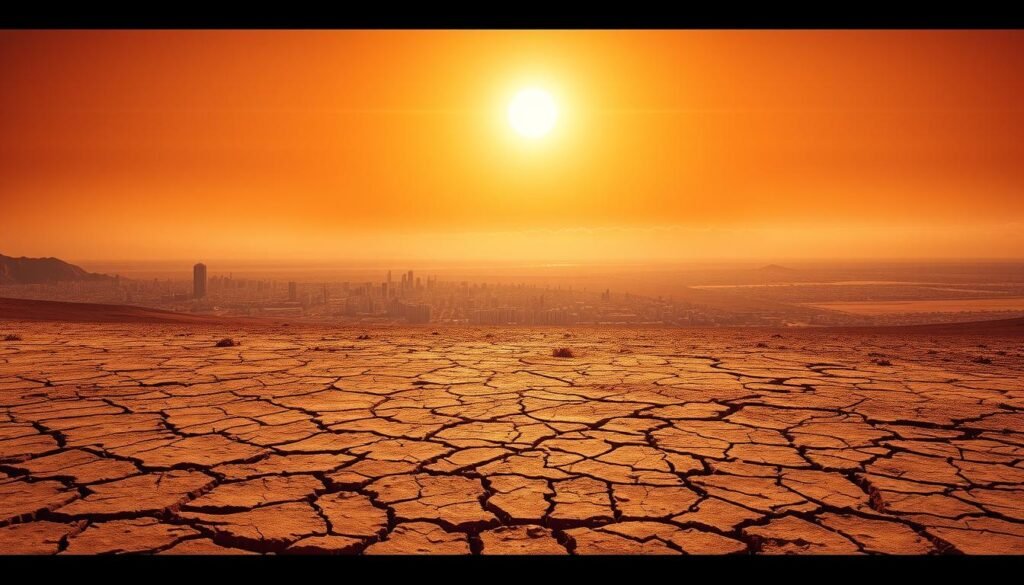
Climate action can have unintended effects when policies neglect local specifics. What seems efficient on paper might spark social unrest or ecological damage. It’s vital to carefully consider these trade-offs before they become irreversible risks.
Biofuels, monocultures, and biodiversity/food security risks
The rapid growth of biofuels often leads to monoculture farming. This approach harms pollinators, depletes wetlands, and strains water resources. As staple crops lose land or water, prices increase, and rural discontent grows.
Combining energy goals with agroecology and indigenous crops can mitigate these issues. Implementing crop rotation, riparian buffers, and local food reserves can stabilize supplies while meeting emission targets.
Technology and finance gaps for long-term adaptation
Many communities face significant financial hurdles for water storage, drought planning, and climate data. Despite the availability of tools like early warning systems, soil sensors, and satellite mapping, access is restricted by cost and capacity.
Public banks, green bonds, and insurance can attract private investment with proper safeguards. Training programs led by local universities and tribal colleges can transform pilots into lasting solutions.
Avoiding maladaptation in transboundary basins
Large-scale projects like dams or canal shifts in transboundary basins can lead to conflict if local voices are ignored. Imbalanced benefits, inadequate flow data, or sudden releases can increase downstream risks and deepen mistrust.
Implementing measures like Free, Prior, and Informed Consent, conflict-sensitive design, and joint hydrology models can reduce maladaptation. Combining allocation rules with drought triggers and transparent monitoring fosters cooperation.
Policy Pathways: Conflict Resolution and Resilience Building
Durable water peace is built on clear rules, trusted data, and fair agreements. These policy pathways connect climate action with conflict resolution. They focus on people, ecosystems, and institutions that last.
Rights-based water governance and land-use planning
Start with rights-based governance that secures land and water tenure. Recognize customary councils and strengthen accountability for projects that affect rivers. Land-use planning that conserves cuts fire risk in the Amazon and protects Indigenous territories.
When agencies map watersheds with open data and local records, they reduce uncertainty. This speeds up permits. Clear rules for grazing corridors, riparian buffers, and recharge zones lower costs and ease conflict resolution during dry spells.
Early warning systems blending ILK and climate data
Early warning systems work best when they mix Indigenous and Local Knowledge with satellite and hydrologic feeds. Communities track phenology and animal behavior, while agencies add forecasts from NOAA and river gauges. Co-produced alerts build trust and guide anticipatory action like water trucking, pasture rotation, and heat-health plans.
Dashboards should show risk tiers, lead time, and suggested steps in plain language. Training local monitors and youth crews improves accuracy and keeps the network running through shocks.
Transboundary accords, benefit sharing, and drought management
Rivers that cross borders need institutions built for benefit sharing. Power trade, reservoir storage swaps, and drought insurance can stabilize supplies across wet and dry years. Joint drought plans set trigger levels, emergency releases, and conflict resolution protocols that all parties accept.
Financing must close technology gaps for Indigenous communities, from climate-smart agroecology to microgrids that back up pumps. Aligning renewable energy with watershed health strengthens resilience and keeps agreements durable.
| Intervention | Core Mechanism | Local Inclusion | Risk Reduced | Co-Benefits |
|---|---|---|---|---|
| Rights-based governance reforms | Secure tenure and FPIC for water and energy projects | Customary institutions recognized in permitting | Disputes over access and allocation | Stronger stewardship and compliance |
| Integrated land-use planning | Protect riparian buffers and recharge zones | Community mapping of sacred and grazing areas | Deforestation-fire feedbacks and flood loss | Biodiversity and soil moisture gains |
| Early warning systems | Blend ILK with climate and hydrologic data | Co-produced alerts and local monitors | Losses from drought, heat, and crop failure | Faster response and trust in public data |
| Transboundary benefit sharing | Power swaps, storage banking, drought insurance | Stakeholder forums including riverine communities | Zero-sum bargaining and escalation | Reliable supply and investment signals |
| Drought management compacts | Trigger-based releases and demand measures | Ag-pastoral user committees | Emergency rationing conflicts | Stabilized food and livestock markets |
Research Gaps and Data for Action in the Global South
The literature mainly focuses on Africa and parts of Asia, leaving vast gaps in Latin America, the Caribbean, Central Asia, and Oceania. Conflict events are documented, but many areas lack consistent fieldwork and comparable data. This hinders cross-region learning and slows policy adoption in the Global South.
Under-studied regions beyond Africa and Asia
Regions like large river islands in the Pacific, dry corridors in Central America, and glacier-fed basins in Patagonia and Central Asia are under-represented. Targeted efforts can document climate exposure, water access, and livelihood shifts using standardized protocols. This approach helps fill research gaps without focusing solely on well-known hotspots.
Internal versus transboundary dynamics and multi-scalar data
Most studies focus on local or national events, but basin-scale and cross-border dynamics are less explored. A multi-layered approach can reveal internal vs transboundary dynamics from local rules to international treaties. It’s essential to include governance quality, hydrology, market changes, and security trends in multi-scalar baselines.
Text-mining and evidence synthesis to guide policy
Semi-automated text-mining helps identify gaps in large datasets. Combined with transparent evidence synthesis, it allows teams to quantify factor co-occurrence and compare methods across disciplines. Open workflows and shared dictionaries facilitate updates. New indicators like Indigenous knowledge, migration, and cooperation outcomes enhance early warning systems in the Global South.
Conclusion
Climate-Induced Conflicts over water in the Global South are on the rise. Heat, drought, floods, and fires are putting a strain on already fragile systems. Climate change acts as a multiplier, exacerbating existing issues. The outcome depends on governance quality, equity, and the resilience of local livelihoods.
In places with fair and transparent institutions, scarcity can foster cooperation over conflict. This is a stark contrast to areas where such systems are lacking.
Indigenous rights are key to resolving conflicts and adapting to climate change. Communities like the Afar and Borana rely on ancient forecasting and collective governance. The Fulani diversify livestock feed, while the Endorois focus on climate-smart agroecology and nature-based income.
Lessons from the Amazon and Arctic highlight the importance of Indigenous stewardship. When given legal protection and a voice, they protect food security and ecosystems.
Policy solutions are clear: rights-based water governance, Free, Prior and Informed Consent, and inclusive institutions. These should blend Indigenous knowledge with climate risk science. Early warning systems, transboundary benefit sharing, and drought management can prevent escalation.
It’s also important to avoid maladaptation, such as biofuel-driven monocultures. These can harm biodiversity and community resilience.
Research gaps need to be addressed, focusing beyond Africa and Asia. Balancing internal and transboundary dynamics is essential. Using text-mining and evidence synthesis can accelerate action.
By aligning Indigenous rights with robust institutions, the Global South can transform resource stress into shared security. This is the most credible path from scarcity to resilience, and from pressure to peace.


